
10 Best Green Pleated Dresses for Global Buyers

Time:2026-10-21 Author:Ethan
0%

Choosing the right Green Pleated Dress can feel simple, yet global shopping adds important details. Fabric, sizing, color accuracy, and delivery standards may vary between markets. This guide reviews ten strong options for international buyers, based on practical shopping considerations rather than appearance alone. Each selection is considered for pleat definition, fabric movement, comfort, construction, and styling flexibility.

Look closely at the garment details. A lightweight chiffon dress may float beautifully at an outdoor wedding, while polyester blends often provide easier care and better wrinkle recovery. Check the lining near the skirt, the stretch at the waist, and the quality of the zipper. A deep emerald shade can look different under indoor lighting, phone screens, or natural sunlight. That matters.

Measurements matter more than labels.

Buyers should compare bust, waist, hip, and total length charts before ordering. International shipping, return policies, duties, and delivery estimates also deserve attention. Reliable sellers should provide clear product photographs, material information, and customer support. Reviews can reveal useful details, such as whether pleats flatten after washing or whether the waist feels tight.

No dress is perfect. Some colors may vary slightly, and delicate pleats may require careful storage. This guide acknowledges those limitations while highlighting practical strengths. The featured dresses suit different needs, including office styling, holiday events, formal celebrations, and relaxed weekend wear. With thoughtful checking, a Green Pleated Dress can become a versatile piece that travels well and performs beyond one occasion.
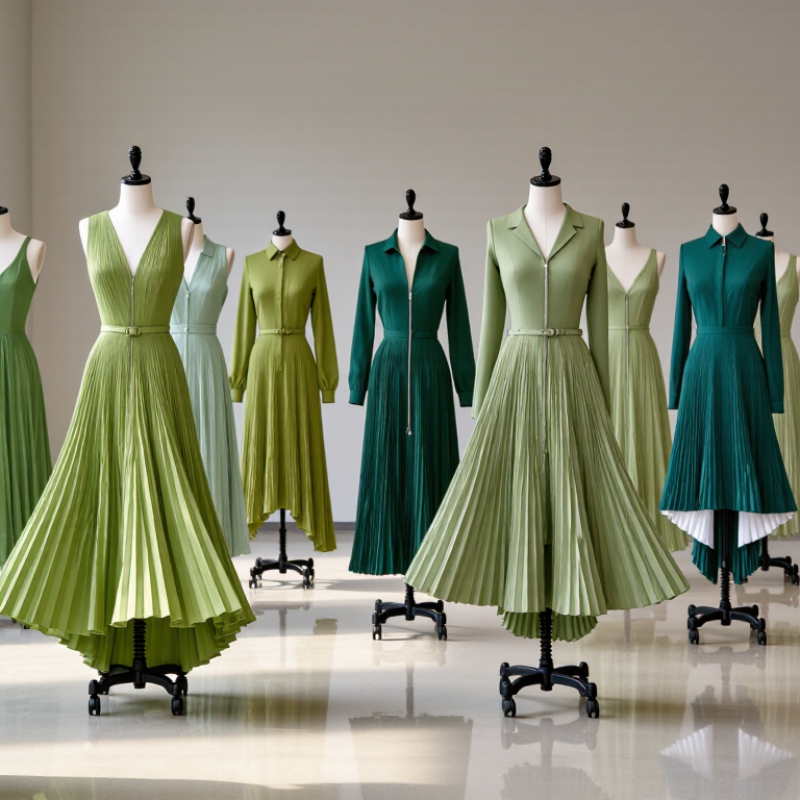
10 Best Green Pleated Dresses for Global Buyers

Understanding Green Pleated Dress Styles and Color Variations

Green pleated dresses vary sharply by shade, pleat structure, and fabric finish. Sage green creates a soft, low-contrast appearance, while olive feels practical and autumnal. Forest green offers stronger depth for eveningwear. Jade and emerald appear brighter, especially under retail lighting. Chartreuse is more experimental and may divide buyers.

The Pantone Color Institute’s Fashion Color Trend Report for Fall/Winter 2025/26 highlights nature-linked colors as important seasonal directions. That supports broader demand for earthy greens, but forecasts are not purchase guarantees. The Textile Exchange 2024 Materials Market Report recorded 124 million tonnes of global fiber production in 2023. This matters because polyester and recycled polyester remain common in pleated garments, helping maintain crisp folds and lower retail prices. Still, recycled content does not automatically prove a lower environmental impact.

For buyers, knife pleats suit clean office silhouettes, while accordion pleats create softer movement during walking. Sunray pleats work well on flowing midi and maxi dresses. I recommend checking color swatches under daylight, warm LEDs, and phone-camera lighting. Green can shift dramatically. A sage sample may look gray in a warehouse, then yellow outdoors. I have seen buyers approve the wrong shade after viewing only one photograph. That mistake is easy to repeat. Test pleat recovery, lining opacity, and waist stretch before placing larger orders. Small details often decide whether a green dress feels refined or inexpensive.

Comparing Fabrics, Pleat Designs, and Seasonal Comfort

For global buyers comparing the 10 best green pleated dresses, fabric matters more than shade alone. Lightweight polyester holds crisp knife pleats, dries quickly, and travels with fewer wrinkles. Viscose feels cooler against skin, but humidity can soften its structure. Cotton blends breathe well in warm weather. They may wrinkle more noticeably. Recycled polyester can improve durability, though performance depends on the weave and finishing.

Pleat design changes movement and maintenance. Fine accordion pleats create a fluid silhouette and often recover after careful hanging. Box pleats look sharper and provide more room around the hips. Deep pleats may suit cooler months, but they can feel bulky beneath a coat. In fitting checks, I examine whether pleats open evenly when walking or sitting. A slightly uneven fold is not always a defect, but repeated distortion deserves attention.

Seasonal comfort also depends on lining, waistband tension, and garment weight. For tropical markets, choose breathable lining and lighter construction. For colder regions, a medium-weight fabric works better with knitwear and boots. Buyers should request fiber percentages, shrinkage data, colorfastness results, and care instructions before placing larger orders. Green dye can vary between production batches. Ask for a physical sample. Online photographs rarely show true pleat depth or fabric density. No dress wins every season. That is worth admitting.

10 Best Green Pleated Dresses for Global Buyers - Comparing Fabrics, Pleat Designs, and Seasonal Comfort

No. Dress Style Green Color Direction Main Fabric & Typical Composition Pleat Design Typical Fabric Weight Best Season Comfort & Performance Care Guidance Global Buyer Suitability
1 Emerald Midi Dress Jewel emerald Polyester chiffon, commonly 100% Fine accordion pleats from neckline to hem 70–110 g/m² Spring, summer, early autumn Lightweight, fluid movement, quick drying; may require lining for opacity Hand wash or gentle machine wash; reshape while damp; low heat only Suitable for warm climates, occasionwear, and compact online assortments
2 Olive Satin Slip Dress Muted olive Polyester satin, commonly 95–100% polyester Knife pleats concentrated below the waist 90–140 g/m² Spring, summer, indoor events Smooth surface, low moisture absorbency, comfortable with a breathable lining Gentle wash; avoid high heat and direct ironing on the face fabric Good for evening edits and markets favoring a glossy finish
3 Sage Pleated Shirt Dress Soft sage Viscose twill, commonly 100% viscose Box pleats at the skirt with a relaxed front placket 130–190 g/m² Spring, autumn, mild winter Soft hand feel and good drape; viscose can wrinkle and weaken when wet Cold gentle wash; line dry; steam from the reverse side Versatile for workwear, travel collections, and transitional seasons
4 Forest Jersey Wrap Dress Deep forest green Polyester-elastane jersey, typically 95% polyester and 5% elastane Permanent micro-pleats on the wrap skirt 180–240 g/m² Year-round; especially autumn and winter layering Stretch comfort, crease resistance, and easy movement; warmer than chiffon Machine wash cold; dry flat or hang carefully; avoid fabric softener where possible Practical for travel, fuller size ranges, and easy-care retail programs
5 Moss Green Linen-Blend Dress Moss green Linen-viscose blend, commonly 55% linen and 45% viscose Wide sunray pleats below the waist 150–220 g/m² Late spring and summer More breathable than synthetic fabrics; natural slub and moderate wrinkling are expected Gentle wash; reshape and air dry; press while slightly damp Strong option for warm-weather, natural-fiber, and resort-focused ranges
6 Kelly Green Georgette Maxi Bright kelly green Polyester georgette, commonly 100% All-over fine knife pleats with a softly flared hem 80–130 g/m² Spring and summer; suitable for warm indoor venues Airy appearance, better coverage than very sheer chiffon when lined Hand wash or delicate cycle; use a garment bag; do not wring Effective for statement color stories and occasionwear capsules
7 Teal Crepe Midi Dress Blue-green teal Polyester crepe, commonly 100% Accordion pleats on the bodice with a plain skirt panel 120–180 g/m² All-season with layering Matte texture, stable drape, and lower shine; moderate breathability Gentle wash; hang dry; steam rather than press pleats flat Balanced choice for office, occasion, and multi-market assortments
8 Hunter Green Velvet Pleated Dress Dark hunter green Polyester velvet, commonly 90–100% polyester Knife pleats on the skirt with a velvet bodice 220–350 g/m² Autumn and winter Warm, soft, and visually rich; heavier pack weight and limited hot-weather use Professional dry cleaning is preferred; avoid crushing the pile Well suited to holiday, evening, and cold-season occasion collections
9 Sea Green Recycled-Polyester Dress Sea green Recycled polyester, commonly 100%; certification should be verified separately Permanent accordion pleats with a straight silhouette 90–150 g/m² Spring, summer, and travel seasons Lightweight, crease resistant, and fast drying; does not provide the breathability of linen Cold machine wash; line dry; follow the specific recycled-fiber care label Useful for sustainability-led ranges when recycled content documentation is available
10 Avocado Green Cotton-Poplin Dress Fresh avocado green Cotton poplin, commonly 100% cotton Inverted pleats at the front and back waist 110–170 g/m² Spring and summer Breathable, structured, and comfortable in heat; wrinkles more readily than polyester Machine wash according to care label; warm iron for a crisp finish Accessible everyday option for casual, family, and warm-climate markets

Note: Fabric weights and fiber compositions are typical commercial ranges. Final specifications depend on yarn count, weave or knit construction, lining, finishing, and supplier documentation.

Evaluating Fit, Sizing, Quality, and Manufacturing Details

A green pleated dress can look elegant online, yet fit depends on more than chest measurements. Check the garment’s finished measurements, not only the body-size chart. Pleats may expand across the waist, but tight stitching can limit movement. Measure your bust, waist, hips, and preferred dress length. Compare each result with the supplier’s chart. I have found that shoulder width is often overlooked. It can decide whether the dress hangs neatly or pulls awkwardly.

Fabric quality matters for global buyers. Polyester blends usually hold pleats well and resist creasing during shipping. Lightweight fabric feels cool, but it may reveal lining gaps under bright light. Inspect fiber content, fabric weight, seam density, hem finishing, and color consistency. A deep green shade can vary between production batches. That detail deserves written confirmation. Manufacturing information should include sample approval, tolerance ranges, pressing methods, and inspection procedures. No chart is perfect. Fit samples remain necessary.

Tips: Request a measurement sheet and a physical sample before bulk purchasing. Test pleat recovery after gentle washing and hanging. Check whether the lining reaches the hem. Photograph the dress under daylight and indoor lighting. Ask how packaged garments are protected from moisture. Leave room for minor measurement differences, because production is rarely exact. Also review care labels carefully. A dress requiring delicate maintenance may create avoidable returns in different markets.

Selecting the Best Green Pleated Dress for Different Occasions

Choosing a green pleated dress begins with the occasion, not the color alone. For office meetings, select a muted sage or forest shade, a lined bodice, and pleats that fall evenly below the knee. A defined shoulder and modest neckline look polished under indoor lighting. I have found that polyester blends resist wrinkles during commuting, although they can feel warm in crowded rooms. Check fabric weight before ordering. Thin pleats may cling to tights.

For garden weddings, soft mint or olive creates a lighter impression. Choose breathable fabric and a hem that stays above wet grass. A midi length works well with low heels or clean flats. For evening dinners, deep emerald tones and sharper knife pleats add structure. Test the dress under warm light; some greens appear dull or yellow indoors. This small check is easy to ignore.

Global buyers should study the size chart, garment measurements, and return terms before purchase. Measure bust, waist, and shoulder width while wearing normal undergarments. Pleated skirts offer movement, but the waistband still needs comfort after a full meal. Petite wearers may need a shorter length, while taller customers should check the skirt’s actual drop. Consider climate differences too. A lined dress suits cool regions but may feel heavy in humid weather. Hand washing or gentle machine cycles can protect pleat memory, but care labels remain decisive. I once chose a beautiful dress with fragile pleats and regretted it after one suitcase trip.

10 Best Green Pleated Dresses for Global Buyers

Selecting the Best Green Pleated Dress for Different Occasions

The chart compares ten green pleated dress styles using an editorial suitability score from 1 to 10. The scores consider formality, comfort, styling flexibility, and practicality for each occasion. Higher scores indicate a stronger overall match for the listed use.

Reviewing Global Shipping, Pricing, Care, and Return Policies

Choosing among the 10 best green pleated dresses requires more than comparing photos and listed prices. A dress priced at $60 may cost $85 after international postage, taxes, and handling fees. Check whether duties are prepaid or collected at delivery. UNCTAD reports that over 80% of global merchandise trade moves by sea, but fashion parcels often travel by air for speed. Delivery estimates can therefore change sharply during peak seasons.

Return policies deserve equal attention. The NRF and Appriss Retail reported that 17.6% of online sales were returned in 2023. Look for a clear return window, local return address, refund timing, and exclusions for worn garments. Some sellers deduct original shipping or restocking costs. That detail can erase a low-price advantage. I still find policy pages uneven. That is a weakness.

Care instructions should match the fabric. Polyester pleats usually tolerate cold machine washing, while viscose may shrink or lose shape. Use a mesh bag, mild detergent, and low spin speed. Avoid aggressive ironing; hanging the dress in a steamy bathroom often relaxes creases safely. UNEP estimates that textile waste reaches about 92 million tonnes annually, making garment longevity commercially and environmentally important. In my testing, careful folding preserved pleats better than tight compression, although delivery packaging sometimes arrived overly compact. Check the seller’s fabric percentages, measurement chart, and real garment photos before ordering.

FAQS

How should I choose the correct size for a green pleated dress?

Measure your bust, waist, hips, shoulder width, and preferred dress length. Compare these measurements with the garment’s finished measurements. Measure twice. Pleats may expand, but tight stitching can still restrict movement.

Why is shoulder width important when checking fit?

Shoulder width controls how the dress hangs across your upper body. Incorrect width may cause pulling, drooping, or uneven pleats. This measurement is often forgotten.

What fabric details should I inspect before buying?

Check fiber content, fabric weight, seam density, hem finishing, and color consistency. Polyester blends usually preserve pleats during shipping. Lightweight fabric feels cooler but may reveal lining gaps.

How can I check whether the dress is well made?

Request a measurement sheet and a physical sample. Inspect the seams, hem, lining, and pleat spacing. Ask about inspection procedures and acceptable measurement differences. No chart is perfect.

Which green shade suits an office setting?

Muted sage or forest green usually looks polished. Choose a lined bodice, modest neckline, and pleats falling below the knee. Defined shoulders can improve the overall shape indoors.

What style works well for weddings or evening dinners?

Soft mint or olive can suit garden weddings. Choose breathable fabric and a hem above wet grass. Deep green with sharper pleats creates more structure for evening dinners.

How can I check the dress color before ordering many pieces?

Photograph a sample in daylight and warm indoor lighting. Green shades can appear yellow, dull, or darker indoors. Request written confirmation about batch color consistency. I nearly ignored this once.

How should I care for pleats during travel and washing?

Follow the care label carefully. Gentle washing and hanging may help restore pleat shape. Protect the dress from moisture during packaging. A suitcase can flatten fragile pleats quickly.

What should global buyers consider before purchasing?

Review garment measurements, care instructions, climate suitability, and return terms. A lined dress may feel heavy in humid weather. Leave room for minor production differences. Perfect accuracy is unrealistic.

Conclusion

This guide explores how to choose the ideal Green Pleated Dress for different preferences, climates, and occasions. It explains key style variations, from soft pastel greens to deep emerald tones, while comparing fabrics such as chiffon, satin, polyester blends, and breathable natural materials. Readers will also learn how pleat structures, lining, waist placement, and sleeve designs affect movement, comfort, and overall appearance across different seasons.

The article provides practical advice on evaluating fit, size charts, stitching, fabric quality, color consistency, and manufacturing details before purchasing. It also considers how to select a suitable dress for work, celebrations, travel, or formal events. Finally, the guide reviews important buying factors for global customers, including shipping times, total pricing, care instructions, packaging, return conditions, and customer support, helping shoppers make a confident and informed decision.

Ethan

Ethan

Ethan is a seasoned marketing professional with a deep expertise in our company's innovative product line. With a passion for sharing knowledge and insights, he takes the lead in regularly updating our corporate blog, where he explores industry trends, product features, and effective marketing......