
China’s Pleated Mini Dress manufacturing sector combines large-scale capacity with increasingly detailed garment engineering. Yet public market reports rarely isolate pleated mini dresses as a separate category. That limitation matters. Buyers should examine supplier evidence, not rely on attractive catalog images.
Grand View Research estimates that the global apparel market reached approximately USD 1.7 trillion in 2023. It also projects continued growth through 2030. Meanwhile, The State of Fashion 2025, published by McKinsey & Company and The Business of Fashion, describes a cautious market shaped by price pressure, slower demand, and stronger supply-chain scrutiny. These findings create a practical question: which Chinese manufacturers can deliver consistent pleats, stable sizing, and dependable export support?
Pleating is technical. Small errors can distort the hem, waistband, or side seam. Fabric recovery also changes after washing. Issey Miyake, a recognized pioneer of pleated fashion, said, “Design is not for philosophy—it is for life.” His principle applies directly to production. A beautiful sample means little if the pleats collapse after five washes.
This guide introduces China’s top 10 Pleated Mini Dress manufacturers through practical criteria. These include factory experience, material selection, sample accuracy, minimum order quantities, quality control, production capacity, and responsible certification practices. We also consider communication and customization.
The ranking is not absolute. It should not be. Supplier performance can vary by season, fabric, and order size. Buyers should request recent samples, inspection records, and clear tolerance standards before signing agreements. A factory visit or independent audit remains valuable, especially for complex pleated designs. The strongest partner is not always the largest one. It is the manufacturer that repeatedly turns a technical design into a wearable, consistent product.
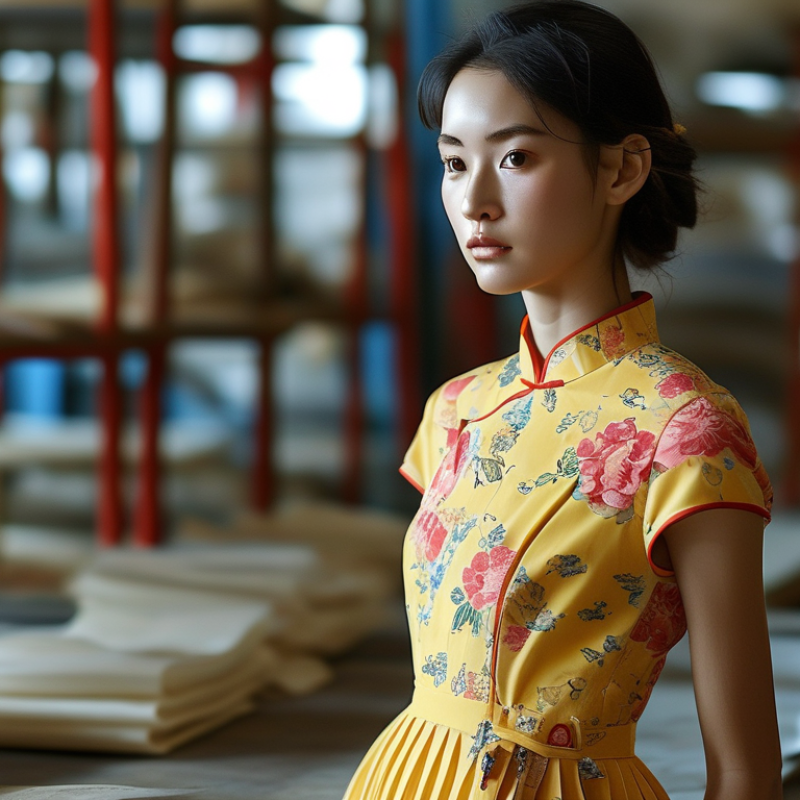
China’s pleated mini dress market is defined by more than factory size or export volume. Strong manufacturers usually combine pattern development, fabric sourcing, pleat control, and flexible production. Their capabilities often include custom sampling, small-batch orders, private labeling, and size adjustments for different markets.
Pleat accuracy is a practical quality signal. Uneven folds can appear after washing, pressing, or long-distance shipping. Experienced factories test fabric recovery, seam strength, colorfastness, and shrinkage before bulk production. They also maintain inspection records and communicate clearly about lead times. These details help buyers assess reliability, even when online factory profiles look impressive. A low quotation may hide weaker fabric or rushed finishing. That deserves careful review.
Tips: Request a physical sample, not only digital photos. Measure pleat spacing with a ruler. Ask for wash-test results and production photos. Confirm minimum order quantities, packaging details, and inspection procedures in writing. It is also useful to compare two or three factories using the same tech pack. No shortlist is perfect. Some suppliers perform well during sampling but struggle with consistent bulk output. A realistic evaluation should include factory communication, technical skill, material transparency, and after-sales responsibility. Local sourcing experience can help, but it should never replace documented checks.
China Top 10 Pleated Mini Dress Manufacturers
A credible ranking starts with verified manufacturing experience, not attractive catalog photos. I would examine factory records, production years, and monthly capacity. Sample quality matters. Each pleat should remain even after washing, folding, and light stretching. Test garments should include different fabrics, waist finishes, lining methods, and zipper placements.
Professional expertise also requires a clear quality system. Inspectors should check fabric shade, seam strength, hem accuracy, and measurement tolerance. A strong manufacturer provides inspection reports and explains correction procedures. Reliable suppliers communicate clearly about sampling, minimum order quantities, lead times, and packaging. Their answers should remain consistent across sales and production teams. That detail reveals operational discipline.
Compliance and traceability deserve equal weight. Ranking criteria should include documented labor standards, material records, and export experience. A factory visit, video audit, or independent inspection can support these claims. However, remote evidence has limits. A polished sample may hide unstable bulk production. I would therefore score sample performance and repeat-order consistency separately. Cost should matter, but it should not dominate the ranking. The cheapest quotation can carry hidden risks, including uneven pleats, delayed delivery, or excessive fabric waste. Communication quality is harder to measure, yet it often decides whether small problems become expensive ones. A ranking is never perfect. It should remain adjustable when new inspection data appears.
The chart presents a transparent weighting model for evaluating the top 10 Chinese manufacturers. It focuses on measurable sourcing factors rather than displaying company or brand data.
Evaluation framework: quality consistency, production capability, compliance, delivery reliability, customization, pricing, sustainability, communication, export experience, and after-sales support. The percentages represent proposed evaluation weights and sum to 100%.
Top 10 Pleated Mini Dress Manufacturers in China
China’s top ten pleated mini dress manufacturers should be judged by production evidence, not attractive websites. A dependable factory can provide fabric samples, pleat tests, size charts, and recent inspection records. It should explain how heat-set pleats behave after washing. That detail matters.
Strong candidates usually include fashion OEM factories in Guangdong, sample-focused workshops in Zhejiang, and woven-dress specialists near Jiangsu. Some handle small orders. Others require larger quantities but offer better automation and lower unit costs. Look for capabilities such as knife pleating, accordion pleating, lining construction, concealed zippers, and custom labels. Production teams should also confirm fabric composition, colorfastness testing, shrinkage control, and tolerance standards before bulk cutting.
Ask each manufacturer for a pre-production sample. Always do this. Check whether pleats align at the waist, hem, and side seams. Measure the garment after washing, not only before shipment. My practical concern is that some factories describe themselves as specialists without showing consistent workmanship across sizes. That claim needs testing. Clear communication also separates reliable suppliers from rushed ones. Confirm lead times, payment stages, packaging details, and correction procedures in writing. A factory that accepts reasonable feedback is often safer than one promising everything immediately.
| Rank | Manufacturing Cluster | Primary Strength | Pleated Dress Capability | Common Fabric Options | Typical Order Range | Best Suited For |
|---|---|---|---|---|---|---|
| 1 | Guangzhou and Dongguan, Guangdong | Fashion apparel and export-oriented production | Strong sample development, trend-led cuts, and flexible pleat patterns | Polyester chiffon, satin, crepe, rayon, and blended fabrics | Small to large production runs | Boutique collections, online fashion labels, and private-label buyers |
| 2 | Humen, Dongguan, Guangdong | Women’s fashion and fast sample turnaround | Suitable for short pleated skirts, fitted bodices, ruffles, and seasonal designs | Polyester, spandex blends, georgette, and lightweight woven fabrics | Low to medium production runs | Start-ups and brands testing new styles |
| 3 | Hangzhou and Shaoxing, Zhejiang | Fabric sourcing, fashion design, and textile finishing | Good access to pleated polyester, printed textiles, and customized surface effects | Polyester chiffon, satin, mesh, recycled polyester, and printed fabrics | Medium production runs with development support | Design-focused collections requiring fabric variety |
| 4 | Ningbo and Cixi, Zhejiang | Commercial garment manufacturing and export production | Consistent construction for repeatable pleated mini dress programs | Woven polyester, viscose, cotton blends, and stretch fabrics | Medium to large production runs | Retail programs and established importers |
| 5 | Suzhou and Changshu, Jiangsu | Textile production, garment finishing, and quality consistency | Suitable for uniform pleat depth, clean hems, lining, and structured silhouettes | Polyester crepe, satin, rayon, cotton blends, and suiting-weight fabrics | Medium to large production runs | Quality-sensitive wholesale and retail orders |
| 6 | Quanzhou and Shishi, Fujian | Garment clusters, sportswear supply chains, and competitive pricing | Practical for casual pleated dresses, easy-care styles, and volume orders | Polyester, nylon blends, jersey, and lightweight woven fabrics | Medium to high production runs | Value-focused collections and promotional programs |
| 7 | Xiamen, Fujian | Export apparel, casual fashion, and product compliance support | Appropriate for relaxed mini dresses, printed pleats, and resort-inspired styles | Rayon, viscose, polyester, linen blends, and printed fabrics | Small to medium production runs | International e-commerce and resortwear sellers |
| 8 | Jinan and Qingdao, Shandong | General apparel production and northern China logistics | Suitable for basic pleated silhouettes, lined garments, and repeat orders | Polyester, cotton blends, viscose, and medium-weight woven fabrics | Medium production runs | Core styles and cost-conscious apparel programs |
| 9 | Wuhan and Hanyang, Hubei | Central China garment production and domestic distribution | Useful for straightforward designs with standard pleating and efficient assembly | Polyester, rayon, jersey, and blended woven fabrics | Small to medium production runs | Domestic retail and regional distribution projects |
| 10 | Zhengzhou, Henan | Large-scale garment production and labor-intensive assembly | Best for repeatable, standardized pleated mini dress designs | Polyester, cotton, viscose, and economical blended fabrics | Medium to high production runs | Basic fashion lines, uniforms, and volume-oriented orders |
China’s top 10 pleated mini dress manufacturers should be compared beyond factory photos. Quality begins with fabric recovery, seam strength, lining accuracy, and pleat stability after washing. A practical audit should inspect 10 finished samples, not one showroom piece. The World Trade Organization’s World Trade Statistical Review 2024 identifies China as the leading clothing exporter, showing its deep production network. However, export scale does not guarantee consistent workmanship.
Customization separates capable suppliers from simple resellers. Ask whether the factory controls pattern making, pleating, dyeing, and final inspection internally. Confirm tolerance levels for waist measurements, hem length, and pleat spacing. Pricing should include fabric, trims, sampling, packaging, and rework costs. The McKinsey State of Fashion 2025 report describes a cautious market, where consumers increasingly balance value with quality. Very low quotations may hide weaker fabric, unstable pleats, or limited inspection. Production capacity also needs proof: request monthly output, current utilization, lead times, and backup equipment. Capacity claims can be optimistic. I have seen impressive schedules fail during peak seasons.
Tips: Request a washed sample and a small pilot order. Compare shrinkage, color consistency, and pleat recovery. Use a third-party inspection before shipment when the order is large. Keep a written specification sheet; memory is not reliable. WHO textile safety guidance also supports checking dyes and finishing chemicals against destination-market requirements.
China Top 10 Pleated Mini Dress Manufacturers?
Choosing the right Chinese manufacturer requires more than comparing a “top 10” list. Check whether the factory actually controls pleating, cutting, sewing, and final inspection. Ask for a recent sample in your target fabric. Measure waist recovery, pleat spacing, hem balance, shrinkage, and color consistency after washing. Small errors become obvious on a short skirt.
Request production records, not only attractive photographs. Review the factory’s MOQ, sample timeline, fabric source, replacement policy, and shipment history. A practical audit should include machine capacity, worker training, quality checkpoints, and documented corrective actions. McKinsey’s State of Fashion 2025 highlights value-conscious consumers and supply-chain resilience as major industry pressures. A supplier that answers slowly may create costly delays later.
Material choices also need evidence. Textile Exchange’s Materials Market Report 2024 estimates global fiber production reached 124 million tonnes in 2023, while polyester represented about 57%. Ask whether recycled-content claims have reliable certificates and whether the fabric performs under repeated wear. Not every low-price quotation is efficient. Sometimes, a slightly higher unit cost reduces rework and returns. No scorecard is perfect. I would still run a small pilot order before scaling, because a successful sample can hide inconsistent pleat recovery across a full production batch.
: Review factory records, sample quality, fabric details, inspection reports, and communication speed. Attractive websites prove little.
Even pleats should remain aligned after washing, folding, and light stretching. Uneven folds can weaken the finished appearance.
Check waist alignment, side seams, hem spacing, lining, zipper placement, and garment measurements. Use a ruler.
Ask for shrinkage, colorfastness, seam strength, and fabric recovery results. Washing can reveal hidden problems.
Some factories accept small batches, while others require larger quantities. Confirm minimum order quantities before sampling.
Confirm lead times, payment stages, packaging, size tolerances, inspection steps, and correction procedures. Written details reduce confusion.
Not always. A low price may indicate weaker fabric, rushed finishing, or higher fabric waste.
Send the same tech pack to two or three factories. Compare samples, costs, test results, and response quality.
No. Remote evidence has limits. A polished sample may hide inconsistent bulk workmanship.
Repeat-order consistency, clear records, technical skill, and responsible problem-solving matter most. My shortlist may still need revision.
China’s Pleated Mini Dress manufacturing market is defined by its strong textile supply chain, flexible production systems, advanced pleating techniques, and ability to serve both emerging labels and established fashion businesses. This article introduces the top 10 Chinese manufacturers selected through practical criteria, including garment quality, fabric control, design development, customization capabilities, production capacity, communication efficiency, pricing transparency, and delivery reliability. The comparison helps readers understand how different suppliers perform across small-batch orders, large-scale production, private-label services, and custom specifications.
Choosing the right manufacturer requires more than comparing unit prices. Brands should evaluate sample quality, pleat consistency, material options, size accuracy, minimum order quantities, quality-control procedures, lead times, and after-sales support. By balancing craftsmanship, customization, cost, and manufacturing capacity, buyers can identify a suitable partner for their target market and product strategy. The guide is designed to provide a clear, practical framework for sourcing a dependable Pleated Mini Dress manufacturer in China while reducing communication risks and improving long-term production outcomes.
