China’s apparel industry offers a wide range of suppliers for Women’s Dress Pants With Pleats. Their capabilities vary across fabric sourcing, tailoring, quality control, and export experience. This guide examines ten promising Chinese suppliers for buyers seeking reliable production partners.
Pleated dress pants demand more than attractive photographs. The front pleats must remain balanced after pressing, sitting, and repeated washing. A skilled factory checks waistband recovery, pocket strength, seam density, and trouser drape. Small details matter. One uneven pleat can change the entire silhouette.
Fashion consultant Tim Gunn once said, “The dress must follow the body of a woman, not the body following the shape of the dress.” This principle also applies to pleated trousers. Good suppliers create movement around the hips and thighs without producing unnecessary bulk. They also adjust patterns for different body proportions and size ranges.
The supplier comparison considers factory experience, sample development, minimum order quantities, material options, inspection procedures, and communication quality. Buyers should request fabric swatches, measurement charts, pre-production samples, and clear finishing specifications. Certifications can support trust, but they should not replace independent quality checks.
No ranking is flawless. A factory may produce excellent samples yet struggle with large orders. Another may offer competitive pricing but communicate slowly. These weaknesses deserve attention. I may also overlook a capable regional specialist because supplier information changes frequently. Careful verification remains essential before signing a production agreement or placing a substantial order.
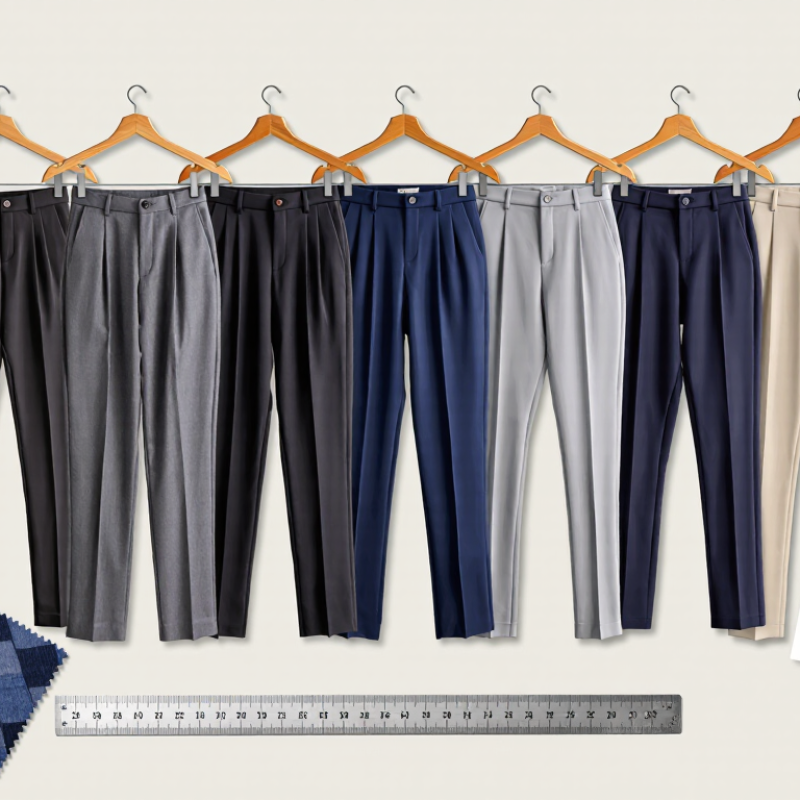
Pleated women’s dress pants combine tailored structure with practical movement.
Their front pleats create extra room around the hips and thighs. The design can look polished without feeling restrictive during long workdays. Fabric choice strongly affects the result. Wool blends offer shape retention, while viscose blends provide softer movement. Polyester can improve durability, but excessive synthetic content may reduce breathability.
China’s women’s dress pants suppliers serve varied markets, from office clothing to uniform programs.
Experienced buyers usually review fabric composition, waistband construction, pleat direction, and size grading. A reliable supplier should provide measurement charts, pre-production samples, and clear inspection standards. Stitch density matters around the zipper, pocket openings, and waistband. These areas face repeated stress. Fit matters.
Market demand is shifting toward versatile trousers with relaxed tailoring and cleaner silhouettes.
Buyers increasingly request low-wrinkle fabrics, inclusive sizing, and adjustable waist details. However, “easy care” claims need testing. A sample may look excellent after pressing but perform differently after washing. I have found that small inconsistencies often appear between samples and bulk production. Better communication helps, but it does not replace inspection. Suppliers should explain lead times, fabric sourcing, defect handling, and packaging conditions in writing. Buyers can then compare suppliers more fairly and reduce avoidable quality problems.
China Top 10 Womens Dress Pants With Pleats Suppliers
Choosing Chinese suppliers for pleated dress pants requires more than comparing prices. Fabric quality, pattern accuracy, and production control matter equally. Ask for samples before discussing large orders. Check the pleat depth, waistband recovery, seam strength, and pressing quality. Small details often reveal factory discipline.
A reliable supplier should explain fabric composition, shrinkage testing, colorfastness, and inspection procedures clearly. Request recent production photos and a detailed measurement chart. Confirm monthly capacity, lead time, packaging, and payment terms in writing. Factory audits can verify equipment, worker safety, and quality systems. However, documents alone are not enough. A polished sample may hide inconsistent bulk production, so inspect random pieces during manufacturing. I have found that communication speed can be useful, but it does not always prove technical ability. That assumption needs caution.
Tips: Compare at least three samples. Wash one before approval. Test pleats after pressing and storage. Ask who handles rework costs. Keep approved measurements and fabric swatches attached to the purchase file. A supplier who accepts reasonable corrections is often more dependable than one offering the lowest quote. Still, even good cooperation cannot replace independent quality checks. Pricing should include fabric waste, inspections, and possible alterations, not just the sewing charge.
China’s top 10 suppliers of women’s pleated dress pants offer practical choices for private-label buyers and fashion wholesalers. Their strengths often include woven fabric sourcing, precise pleat construction, and flexible production quantities. China remains a leading global apparel exporter, according to WTO trade data. This supports its broad manufacturing capacity, but capacity alone does not prove quality.
A useful supplier review should examine fabric composition, waistband recovery, stitching density, and pressing consistency. Textile Exchange’s Materials Market Report 2024 reported that polyester represented about 57% of global fiber production in 2023. Therefore, buyers should compare polyester blends with viscose, cotton, or recycled alternatives. McKinsey’s State of Fashion 2025 also expected low single-digit industry growth, increasing pressure on pricing and inventory control. The ten shortlisted suppliers should provide size charts, pre-production samples, inspection records, and clear lead-time commitments. A polished sample can still hide production variation. That risk deserves attention.
Tips: Request three samples in different sizes. Measure pleat spacing after washing and steaming. Check pocket alignment, zipper strength, and fabric transparency under daylight. Ask for recent testing documents when performance claims are important. Confirm whether the quoted price includes pressing, packing, labels, and export documentation. Small details matter. A supplier with excellent communication may still need stronger quality controls, so use an independent inspection before shipment. Supplier rankings are useful, but they should remain a starting point rather than final proof.
| Rank | Supplier Profile | Manufacturing Hub | Core Product Focus | Common Fabric Options | Typical MOQ | Sample Lead Time | Bulk Lead Time | Customization Capability | Common Compliance Documents |
|---|---|---|---|---|---|---|---|---|---|
| 1 | Profile A | Guangzhou, Guangdong | Fashion-forward tailored trousers and office separates | Polyester-viscose, stretch woven, recycled polyester blends | 100–300 pcs/style | 7–12 days | 25–40 days | Pleat depth, waistband, pockets, labels, colors and sizing | Material composition report, inspection report, social-audit documents |
| 2 | Profile B | Dongguan, Guangdong | Private-label women’s workwear and uniform trousers | Polyester-cotton, mechanical stretch, wrinkle-resistant twill | 200–500 pcs/style | 10–15 days | 30–45 days | Size grading, functional pockets, logo embroidery and packaging | AQL inspection records, needle-control records, fiber-content testing |
| 3 | Profile C | Shaoxing, Zhejiang | Fabric-led production of pleated trousers for overseas retailers | Viscose, rayon blends, crepe, satin-backed woven fabrics | 300–800 pcs/style | 10–18 days | 35–50 days | Custom fabric sourcing, pleat placement, lining and color matching | OEKO-TEX-related test reports when requested, colorfastness and shrinkage tests |
| 4 | Profile D | Ningbo, Zhejiang | Mid-market women’s formalwear and capsule collections | Polyester-elastane, wool-look blends, recycled woven fabrics | 150–400 pcs/style | 7–14 days | 28–42 days | Tech-pack development, fit revisions, trims and private labeling | Pre-shipment inspection, restricted-substance testing and packing list |
| 5 | Profile E | Hangzhou, Zhejiang | Contemporary women’s trousers with clean, minimalist tailoring | Tencel blends, viscose-polyester, cotton stretch and twill | 100–300 pcs/style | 8–14 days | 30–45 days | Pattern adjustments, sustainable fabric options and custom hardware | Fiber-content, colorfastness, dimensional-stability and final-inspection reports |
| 6 | Profile F | Quanzhou, Fujian | Value-focused bulk production for chain stores and distributors | Polyester-viscose, cotton-polyester and basic stretch fabrics | 500–1,000 pcs/style | 10–15 days | 35–55 days | Standardized patterns, basic pleat variations, labels and packaging | Commercial invoice, packing list, inspection report and origin documentation |
| 7 | Profile G | Suzhou, Jiangsu | Premium tailored trousers and structured women’s suiting | Wool blends, fine polyester-viscose and elastane suiting cloth | 100–250 pcs/style | 12–20 days | 35–50 days | Detailed pattern engineering, half lining, pressing and fit corrections | Fabric performance tests, needle detection and third-party inspection |
| 8 | Profile H | Wuxi, Jiangsu | Comfort-oriented office trousers and easy-care workwear | Stretch twill, polyester-rayon, cotton-modal and wrinkle-resistant fabrics | 200–500 pcs/style | 8–15 days | 30–45 days | Comfort waistband, stretch grading, custom pockets and care labels | Shrinkage, colorfastness, fiber-content and quality-control reports |
| 9 | Profile I | Haining, Zhejiang | Small-batch fashion manufacturing and online retail collections | Polyester crepe, satin, rayon blends and lightweight woven fabrics | 50–150 pcs/style | 7–12 days | 20–35 days | Low-volume development, digital samples, color changes and trims | Basic material test reports, measurement report and shipment documents |
| 10 | Profile J | Jiaxing, Zhejiang | Scalable production of basic and uniform-style pleated trousers | Polyester-cotton, polyester-viscose, gabardine and stretch twill | 300–800 pcs/style | 10–16 days | 35–50 days | Standard and extended sizing, pleat configuration, branding and packaging | Factory audit records, inspection report, fiber-content and colorfastness tests |
Note: The figures above are practical China apparel-sourcing reference ranges for anonymous supplier profiles. Actual MOQ, pricing, lead time, fabric availability and compliance documentation should be confirmed directly during supplier qualification.
China’s top ten women’s dress pants suppliers should be judged beyond attractive samples. Manufacturing standards reveal how consistently a factory can repeat quality. Look for documented fabric inspections, calibrated measuring tools, and controlled sewing procedures. Standards matter. Suppliers should follow applicable textile safety requirements and maintain traceable production records. Ask whether inspections cover shrinkage, colorfastness, seam strength, and pleat alignment.
Customization requires more than changing a waistband or adding pockets. A reliable supplier should review your tech pack, fabric composition, size chart, and artwork before sampling. They should confirm pleat depth, crease position, pocket shape, lining weight, and tolerance limits. Fit must be tested. A practical mistake is approving one sample too quickly. Different fabric batches can change drape and recovery, especially around the hips and knees. Request several size samples when the design has structured pleats.
Quality control should operate at several production stages, not only before shipment. Inspectors can check incoming fabric, cutting accuracy, in-line sewing, pressing, and final packing. Ask for inspection reports with measurements and defect photos. An agreed sampling plan makes decisions clearer. Still, no checklist is perfect. A factory may pass visual checks while missing long-term pilling or seam fatigue. Consider wash testing and repeated wear trials for important programs. Suppliers that explain failures honestly are often more dependable than those promising flawless results. Clear communication, realistic lead times, and corrective-action records help separate experienced manufacturers from temporary trading operations.
Comparing the top ten women’s pleated dress-pants suppliers requires more than reading the lowest unit price. Request the same specification from each factory: fabric composition, GSM, pleat depth, stitching method, size range, packaging, and inspection terms. A quote of $8 may become $11 after custom labels, carton charges, and sampling. Use landed cost, not factory price. The World Bank’s Logistics Performance Index 2023 shows clear differences in customs efficiency and shipment reliability across exporting markets.
Minimum order quantity also changes the real price. Ask for separate costs at 100, 300, and 1,000 pieces. Some suppliers reduce prices sharply at higher volumes, while others protect capacity with strict production batches. Confirm whether the MOQ applies per color, size, or total order. Small buyers should calculate unsold inventory carefully. This is where many comparisons fail.
Export service deserves equal attention. Check experience with commercial invoices, packing lists, HS classification, export cartons, and pre-shipment inspections. The WTO World Trade Statistical Review 2024 reported weaker global merchandise trade conditions in 2023, so delivery promises need evidence, not optimism. Request recent lead-time records and a freight quote under the same Incoterm. A supplier offering FOB may look cheaper than one offering DDP, but the comparison is incomplete. I would also test one sample wash. Pleats can soften, and a perfect spreadsheet cannot show that.
This anonymous benchmark compares common China apparel-sourcing profiles by estimated FOB unit price, minimum order quantity, and export-service readiness. Lower MOQs and higher service scores may suit small brands, while larger MOQs can provide better unit pricing for established buyers. Actual quotations vary by fabric, construction, customization, testing, packaging, order volume, and destination market.
They are tailored trousers with front pleats. Pleats add room around the hips and thighs. The fit can feel polished and comfortable.
Wool blends retain shape well. Viscose blends offer softer movement. Polyester can improve durability but may reduce breathability.
Request fabric details, measurement charts, and pre-production samples. Review waistband construction, pleat direction, size grading, and inspection standards.
Pleat spacing affects the silhouette. Waistband recovery affects comfort after repeated wear. Weak stitching may fail near zippers and pockets.
Wash and steam samples before approval. Check shrinkage, transparency, colorfastness, and pleat alignment. Daylight reveals problems better.
Yes. Request at least three sizes. Different sizes reveal grading and fit problems. One approved sample is not enough.
Confirm pleat depth, crease position, pocket shape, lining weight, and tolerance limits. Review the tech pack together. Small errors spread quickly.
Check fabric before cutting, sewing during production, and packing before shipment. Request measurement reports and defect photos. Independent inspection remains useful.
Not always. Fabric batches and pressing conditions can change the result. I may trust samples too quickly. Bulk inspection is still necessary.
Record lead times, defect handling, packaging, labels, pressing, and export documents. Written details reduce confusion. Promises need evidence.
This guide explores the growing market for Women’s Dress Pants With Pleats, focusing on their balance of comfort, structure, and professional style. It explains how pleats influence fit, fabric performance, and seasonal demand, while outlining the main factors buyers should consider when selecting Chinese suppliers. These include manufacturing experience, fabric sourcing, production capacity, communication, sample development, and reliability for international orders.
The article also presents ten qualified Chinese supplier options without focusing on brand names, helping buyers compare their product strengths and service capabilities. It reviews manufacturing standards, customization possibilities, size grading, stitching quality, inspections, and packaging requirements. In addition, readers will learn how to evaluate pricing, minimum order quantities, lead times, payment terms, and export support. By comparing these details carefully, importers, retailers, and private-label businesses can choose suppliers that provide consistent quality, flexible customization, and dependable delivery for different market needs.
