
Finding a dependable Pleated Skirt Dress supplier in China takes more than comparing catalog photos. This guide introduces ten suppliers for buyers to investigate, with attention to product range, customization, production capacity, and communication. A list can help narrow the search, but it cannot replace direct checks. Supplier details and capabilities may change over time.
Pleated garments need careful construction. Buyers should examine sample pleats for even spacing, secure seams, consistent sizing, and how the fabric moves when worn. Ask about fabric options, color matching, minimum order quantities, sample timelines, and quality checks before placing a larger order. Care labels matter, too; washing or pressing can affect the shape of pleats. Small details count.
A polished website is not proof of a reliable production line. Request current product information and clear answers about what the factory makes in-house. Compare written specifications with physical samples, and keep agreed details in writing. These steps can reveal gaps early. No supplier is perfect, and a low price may come with trade-offs in fabric, finishing, or lead time. This overview offers a practical starting point, not a guarantee. The best match depends on your design, order size, quality expectations, and how clearly each supplier can meet them.
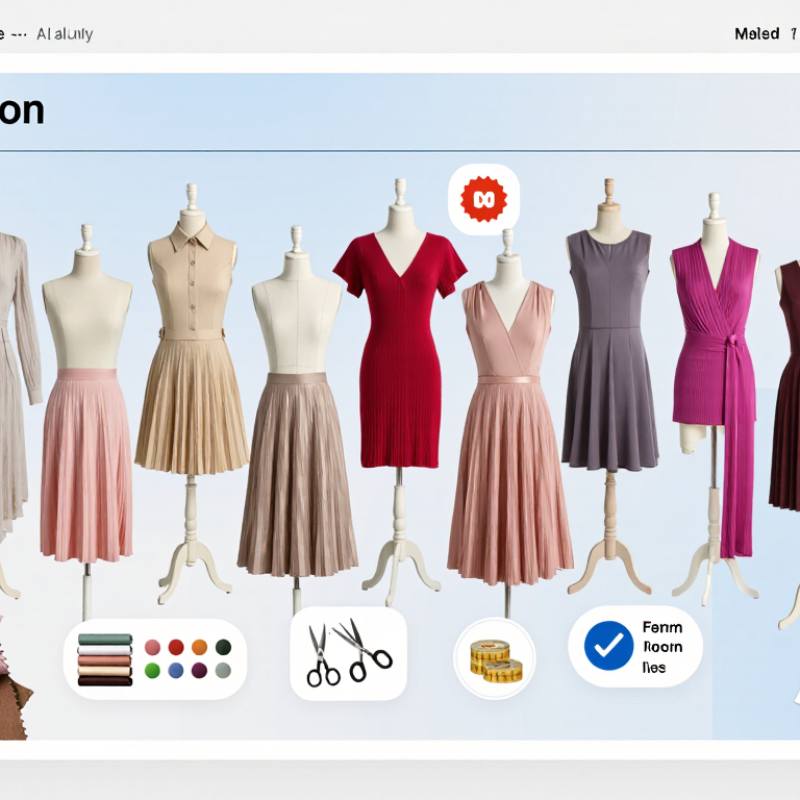
China’s Pleated Skirt Dress Sector: 2024 Export Data and Product Scope
China remains a major sourcing base for pleated skirt dresses. China Customs data, reported by industry trade bodies, placed China’s 2024 textile and apparel exports near US$300 billion. This figure covers many product categories, not pleated dresses alone. The relevant scope usually includes knitted garments under HS 6104 and woven garments under HS 6204. UN Comtrade data can help compare destination markets, but classification is not perfectly precise.
Pleated skirt dress suppliers commonly offer polyester, viscose, cotton blends, and recycled fabrics. Product differences appear in pleat depth, heat-setting quality, lining, waist construction, and color stability. Export buyers should inspect samples after washing. A dress may look sharp under showroom lighting, yet lose its shape during transport or cleaning. That risk deserves more attention. The China Chamber of Commerce for Import and Export of Textile and Apparel reports continued demand for flexible, small-batch apparel production, especially in Asian, European, and North American markets. However, shipment value alone cannot identify the best ten suppliers.
Tips: Build a shortlist using customs records, factory audits, production photos, and recent sample orders. Ask for fabric composition, shrinkage results, needle inspection records, and social compliance documents. Compare at least three quotations. The cheapest offer may hide weaker pleat recovery or inconsistent sizing. Supplier rankings also need updating because export performance changes with currency movements, freight costs, and seasonal demand.
China Top 10 Pleated Skirt Dress Suppliers?
A practical ranking should compare more than factory photos. The top ten Chinese suppliers are assessed by MOQ, monthly capacity, lead time, and AQL performance. Lower MOQ suits testing, usually around 100–300 pieces per style. Larger factories may exceed 50,000 pieces monthly, but capacity is not always available. McKinsey’s State of Fashion 2025 expects low single-digit industry growth, increasing pressure on flexible production and accurate delivery.
Supplier rankings should record sample approval time, fabric booking, and bulk shipment history. A 25–35 day lead time is competitive for standard pleated dresses. Complex fabrics may require longer pressing and inspection. AQL 2.5 is a common commercial benchmark under ISO 2859-1, but buyers should define critical, major, and minor defects clearly. The WTO’s 2024 trade review confirms China’s continuing leadership in global clothing exports, yet export scale does not prove every supplier is reliable. That distinction matters.
Tips: Request three recent production records, not only a quotation. Check pleat recovery after washing. Ask for hourly output during peak season. Confirm whether the stated MOQ includes color and size splits. A factory promising everything may deserve more questions. My ranking would also deduct points for unclear inspection evidence, even when the price looks attractive.
A reliable top-ten shortlist of pleated skirt dress suppliers should begin with fabric evidence, not catalog images. Experienced factories usually offer polyester satin, chiffon, cotton blends, and recycled fibers. Each fabric reacts differently to heat, washing, and humidity. Ask for swatches with fiber content, weight, width, and shrinkage results. Small details matter.
Pleat technology separates capable suppliers from basic cut-and-sew workshops. Knife pleats create clean vertical lines, while accordion pleats provide greater movement. Heat-set pleating can improve shape retention, but excessive temperature may damage delicate fibers. Request wash-test photos and measurements before and after laundering. The result should remain consistent across the waistband, skirt body, and hem. That is difficult.
Certification records also deserve careful review. Useful evidence may include ISO 9001 quality management, OEKO-TEX Standard 100 testing, and GRS certification for recycled materials. Check the certificate holder, factory address, scope, and expiry date. Social compliance audits can support supplier reliability, but an audit alone does not guarantee daily performance. Verify production records and worker-safety procedures directly.
OEM data makes comparison more practical. Record minimum order quantities, sample lead times, bulk production capacity, and alteration policies. A capable supplier should explain pattern grading, custom labels, color matching, packaging, and inspection checkpoints. Ask for defect rates from recent orders, although some factories may provide incomplete figures. That limitation deserves attention. A strong profile should include production photos, named quality contacts, test reports, and clear communication timelines. Sample approval remains essential before committing to volume.
A credible comparison of ten pleated-skirt dress suppliers starts with matching specifications, not headline prices. Ask each supplier to quote the same fabric, lining, pleat style, size range, and packaging. Request prices at several order volumes, such as 100, 300, and 500 pieces. These are comparison points, not universal industry MOQs. Material choice and production capacity can shift minimums sharply.
Compare MOQ per style and color, sample fees, sample lead time, and bulk-production timing. McKinsey’s State of Fashion 2024 report found that 71 percent of surveyed fashion executives expected geopolitical instability to affect sourcing decisions. That makes backup capacity and clear delivery assumptions worth checking, even for a small order. A sample can look perfect under showroom lights. Check pleat recovery after pressing and washing, too; this detail is easy to overlook.
Incoterms can make two similar quotes very different. Under ICC Incoterms 2020, EXW, FOB, and DDP assign different costs and responsibilities. Ask suppliers to quote on the same agreed term, with destination, freight, insurance, and duty assumptions stated separately. Keep it comparable. I would also record which charges remain estimates, since freight and customs costs can change before shipment. A neat spreadsheet helps, but it cannot replace a confirmed sample and written production schedule.
China Top 10 Pleated Skirt Dress Suppliers?
A supplier review should begin on the factory floor, not with a polished catalog. During an audit, check cutting tables, pleating equipment, pressing areas, and finished-goods storage. Ask who approves fabric changes and how workers identify each production lot. Records should match the process you can observe. An audit is only a snapshot, though. A tidy visit does not prove every order will run smoothly.
For REACH-related due diligence, request current test reports for the actual fabrics, linings, prints, and trims used in your styles. Confirm that report details match material descriptions and colors in the purchase order. If a supplier substitutes components, ask whether the change requires fresh testing. Paperwork can look complete while missing a newly added trim. Details matter.
Agree on an AQL 2.5 sampling plan, including inspection level, defect categories, and the method for handling rejected lots. AQL 2.5 is not a promise that exactly 2.5 percent of every shipment will be defective. Keep inspection photos and corrective-action records. Traceability should connect fabric rolls and trims to cutting batches and finished cartons. In practice, labels sometimes drift from records; test the system with one sample order before relying on it at scale.
Compare minimum order quantity, monthly output, lead time, and inspection evidence. Request three recent production records. Photos tell little.
Around 100–300 pieces per style can suit a small test. This varies by fabric and factory. Confirm color and size splits.
Give every supplier the same fabric, lining, pleat, size, and packaging details. Request prices for 100, 300, and 500 pieces. State the destination and shipping terms clearly.
It can be competitive for standard designs, but it is not guaranteed. Check sample approval, fabric booking, and peak-season capacity. Complex fabrics may need extra pressing time.
Inspect the pleats after pressing and washing. Check seams, lining, and measurements in good light. One attractive sample can still hide production problems.
It sets a sampling approach, not a promise of exactly 2.5 percent defects. Define inspection levels, defect categories, and how rejected lots will be handled.
Ask about hourly output, equipment, and recent production records. Large monthly capacity does not mean open production slots. Capacity varies.
Match fabric rolls and trims to cutting batches and finished cartons. Test the records with a sample order. Labels can drift, so I would not rely on paperwork alone.
This article examines China’s Pleated Skirt Dress supply sector through a practical sourcing lens, beginning with an overview of the market, export context, and range of products available. It compares ten supplier profiles using factors such as minimum order quantities, production capacity, lead times, and quality-control practices. Readers will also find guidance on assessing fabric options, pleating methods, certifications, and original equipment manufacturing capabilities when evaluating potential partners.
The article explains how to compare quotations, sampling arrangements, payment and shipping terms, and order requirements against common industry benchmarks. It also outlines a due-diligence process covering factory audits, material testing, AQL 2.5 inspection criteria, and supply-chain traceability. Together, these points help buyers ask more focused questions, identify suitable suppliers, and make informed decisions about product quality, production schedules, and sourcing costs.
