
Top 10 White Pleated Dress Styles for Global Buyers

Time:2026-09-16 Author:Sophia
0%

A White Pleated Dress combines movement, structure, and easy visual appeal. Its folds catch light differently across cotton, chiffon, satin, and recycled polyester. That flexibility makes it relevant for weddings, resort collections, office capsules, and modest occasionwear.

Global buyers are becoming more careful. The Business of Fashion and McKinsey’s State of Fashion 2025 report describes fashion growth as slower and more value-sensitive, encouraging stronger product decisions. Buyers now examine fabric recovery, lining quality, size consistency, and delivery reliability. These details matter more than a beautiful product photograph. They also affect returns, reviews, and long-term supplier relationships.

The Ellen MacArthur Foundation has repeatedly highlighted fashion’s waste challenge, while Textile Exchange’s Preferred Fiber and Materials reports encourage wider use of lower-impact materials. Therefore, this guide considers more than appearance. It reviews pleat depth, opacity, wash performance, waistband comfort, and export-friendly construction. Small choices become visible. A sharply pressed accordion pleat can elevate a simple silhouette, while uneven spacing may signal weak quality control.

No ranking is universal. That caveat matters. Climate, culture, body shape, and retail positioning all influence demand. A lightweight white dress may suit Dubai’s warm season, but require stronger lining for European customers. This selection of the top 10 White Pleated Dress styles gives global buyers a practical starting point. It combines commercial appeal with technical questions worth asking suppliers. Some recommendations may still need refinement, especially as material standards and consumer expectations change. Reliable sourcing requires evidence, not assumptions.
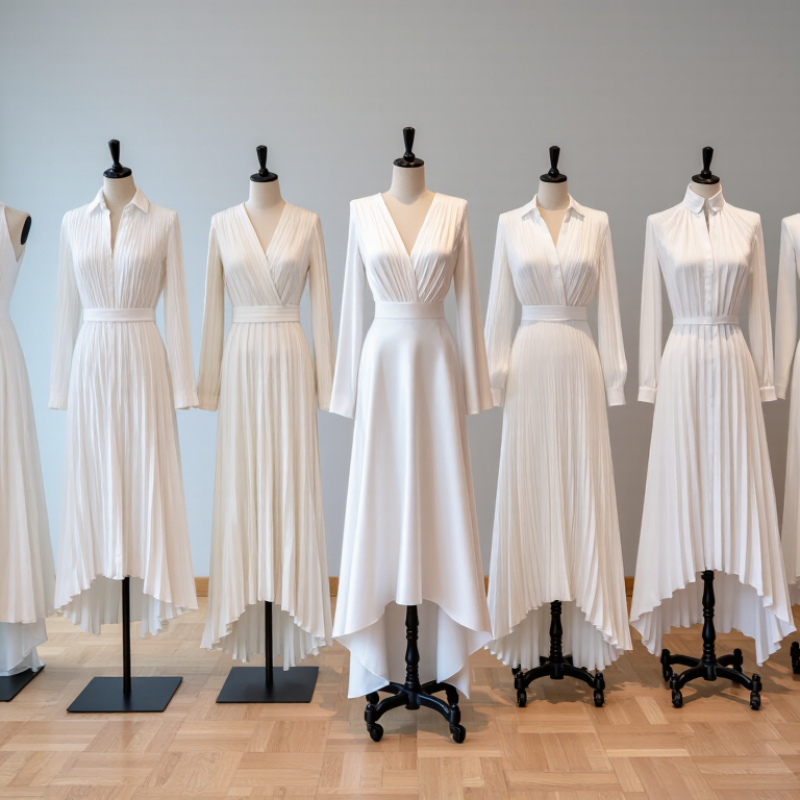
Top 10 White Pleated Dress Styles for Global Buyers

What Defines a White Pleated Dress in Global Fashion Markets

Top 10 White Pleated Dress Styles for Global Buyers

What Defines a White Pleated Dress in Global Fashion Markets

A white pleated dress combines color, structure, movement, and controlled volume. Its identity depends on more than visible folds. Buyers examine pleat depth, spacing, recovery, fabric weight, and surface brightness. Accordion pleats create fluid movement, while knife pleats offer sharper visual order. Box pleats provide a stronger, more architectural silhouette.

Material choice changes the dress significantly. Polyester blends often hold pleats during shipping and repeated wear. Cotton feels cooler, but it may crease unevenly after washing. Satin reflects light and can expose poor stitching. A practical buyer checks the garment under daylight, indoor lighting, and camera flashes. White can look clean in one setting and yellowish in another. Details matter.

Global markets also judge comfort and adaptability. A lined skirt reduces transparency, especially in bright climates. Breathable fabric supports summer demand, while longer sleeves suit modest fashion preferences. Measurements should include bust ease, waist placement, hem width, and pleat expansion. Size labels alone are unreliable across regions. Not always.

In sample reviews, I look for even hems, secure waist seams, and pleats that return after gentle compression. Loose threads suggest weak finishing, though appearance can sometimes hide production problems. This is where judgment can fail. Care labels must clearly explain washing, ironing, and storage. Buyers also value consistent color lots and dependable inspection records. A beautiful sample means little if the next shipment changes.

Ten White Pleated Dress Styles and Their Distinctive Features

White pleated dresses offer movement, texture, and reliable visual appeal for international buyers. Their success depends on cut, fabric weight, and local climate.

The A-line midi creates a balanced silhouette and works well for office or daytime collections. The fit-and-flare mini feels youthful, with sharp pleats that emphasize movement. A pleated maxi delivers graceful coverage and suits resort, evening, or modest-wear markets.

The shirt dress combines a collar, buttons, and structured pleats for practical styling. It often performs well in transitional wardrobes. The wrap pleated dress adjusts easily across different body shapes, but its inner tie must stay secure.

Keep the details clear.

The one-shoulder style adds asymmetry and photographs strongly, though it may need careful fitting. A high-neck pleated dress offers a refined appearance and better coverage for conservative markets. The tiered pleated dress creates extra volume through layered sections, so breathable fabric matters.

A pleated slip dress uses thin straps and soft folds for a lighter, more delicate look. The pleated blazer dress blends tailoring with feminine texture, making it suitable for formal retail edits.

In my fitting experience, hidden seams and even pleat spacing reveal construction quality quickly. Buyers should test colorfastness and shrinkage before large orders. No style suits every market. A beautiful sample can still feel impractical in humid weather.

Fabrics, Pleat Types, and Construction Methods to Compare

Top 10 White Pleated Dress Styles for Global Buyers

Fabric selection changes both pleat definition and purchasing risk. Textile Exchange’s 2024 Materials Market Report states that global fiber production reached 124 million tonnes in 2023. Polyester represented the largest share, while cotton remained widely used. Polyester typically holds sharp knife pleats well and resists rapid creasing during transport. Cotton feels cooler, but its pleats may soften after washing. Recycled polyester can support material goals, although buyers should request verified content certificates and test reports.

Pleat type also affects production cost. Knife pleats create a clean, uniform surface for office dresses and occasionwear. Box pleats provide more movement around the hips. Accordion pleats need precise heat-setting, especially on lightweight satin or chiffon. Sunray pleats often require careful panel cutting because the width changes from waist to hem. Small errors become visible quickly.

Construction deserves equal attention. Review seam placement, lining length, waist reinforcement, and hem recovery before approving samples.

A pleated dress can look elegant on a hanger but twist during wear. It happens.

Experienced buyers should test at least three laundering cycles and measure pleat retention against the original sample. AATCC 135 offers a recognized method for evaluating dimensional changes after home laundering.

Still, one laboratory test cannot represent every climate or consumer habit. Request fabric weight, shrinkage results, colorfastness data, and pressing instructions. The best comparison combines touch, measurement, and repeated wear trials.

How to Match Dress Styles with Body Shapes and Occasions

Top 10 White Pleated Dress Styles for Global Buyers

Choosing a pleated dress should begin with body shape and occasion, not trends alone. An A-line midi balances pear-shaped figures and works well for office events. A fit-and-flare design defines the waist on hourglass figures. Straight body shapes may prefer a belted shirt dress or a tiered maxi for added structure. Empire-waist pleats suit petite wearers by creating a longer visual line. Wrap styles offer adjustable comfort, especially when international sizing varies.

For formal dinners, choose fine pleats, a lined bodice, and a controlled hem. A halter dress can highlight athletic shoulders, while wider straps provide better support for fuller busts. Blazer dresses suit professional settings, but deep pleats may add unwanted volume around the waist. For outdoor ceremonies, lightweight fabric feels cooler, yet it can crease easily during travel. I have found that a midi length is the safest choice across many climates and dress codes. Still, no style flatters every body equally.

Tips: Check the garment’s actual measurements, not only the labeled size. Test the fabric against bright light for transparency. Petite customers should avoid overwhelming maxi lengths unless tailoring is available. Curvier buyers may prefer pleats that open gently, rather than sharp, crowded folds. Consider local customs, weather, and sitting comfort before purchasing. A perfect match does not always exist. Fit may need adjustment.

Top 10 White Pleated Dress Styles for Global Buyers - How to Match Dress Styles with Body Shapes and Occasions

Rank Dress Style Key Design Features Recommended Body Shapes Best Occasions Preferred Length Suitable Fabrics Styling Direction Global Buying Notes
1 Pleated A-Line Midi Dress Defined waist, gently flared skirt, evenly spaced knife pleats Pear, rectangle, hourglass Office wear, daytime events, garden parties, travel Below the knee to mid-calf Polyester georgette, crepe, lightweight satin Add a slim belt and neutral pumps; use a cropped jacket for structure A versatile core style; check lining opacity and waist stretch for varied markets
2 Pleated Wrap Dress Adjustable wrap front, V-neckline, pleated lower skirt Hourglass, pear, apple with a moderate V-neck Brunch, weddings, resort dining, semi-formal gatherings Midi or ankle length Viscose blend, matte satin, soft polyester crepe Pair with low heels and minimal jewelry; secure the wrap with an inner button Offer adjustable coverage and clear wrap instructions for international customers
3 Pleated Shirtwaist Dress Button-front bodice, collar, waist tie, structured pleated skirt Rectangle, pear, hourglass Workwear, city travel, smart-casual meetings Knee to midi Cotton poplin, cotton-blend twill, polyester crepe Wear with loafers or ankle boots; roll the sleeves for a relaxed look Breathable cotton suits warm regions; verify colorfastness and button security
4 Pleated Maxi Dress Full-length flowing skirt, fitted or softly gathered bodice Tall figures, rectangle, pear, hourglass Evening dinners, beach resorts, formal celebrations Ankle to floor length Chiffon, georgette, lightweight polyester satin Use a defined waist and elevated sandals; choose a shorter hem for petite customers Include accurate garment length and lining details; floor-length styles require careful shipping folds
5 Pleated Halter-Neck Dress Neck-tie or halter neckline, open shoulders, fluid pleated skirt Hourglass, rectangle, inverted triangle Summer parties, resort wear, cocktail events Mini, knee, or midi Pleated polyester, satin, lightweight chiffon Keep accessories simple; pair with a compact clutch and heeled sandals Provide adjustable neck ties and bust measurements; consider regional modesty preferences
6 Pleated Fit-and-Flare Dress Close-fitting bodice, pronounced waist, full pleated skirt Hourglass, pear, rectangle Date nights, receptions, celebratory dinners Knee or midi Stretch crepe, ponte knit, woven polyester with elastane Choose a simple neckline and pointed-toe shoes to balance the skirt volume Use stretch panels or a back zipper; list both body and garment measurements
7 Pleated Slip Dress Slim shoulder straps, bias-inspired silhouette, soft vertical pleats Rectangle, hourglass, petite frames Layered casual wear, holidays, evening occasions Midi or ankle length Satin, viscose, polyester charmeuse Layer over a fitted top or under a blazer; add flat sandals for daytime A lining and adjustable straps improve wearability; show transparency under daylight
8 Pleated Tunic Dress Relaxed fit, straight or softly curved hem, minimal waist definition Apple, rectangle, inverted triangle Casual workdays, sightseeing, warm-weather daily wear Above-knee to knee Cotton voile, linen blend, lightweight viscose Wear with leggings or straight trousers; use a narrow belt when more shape is desired Prioritize airflow and easy-care finishes for hot climates; specify shrinkage expectations
9 Pleated One-Shoulder Dress Asymmetric neckline, one exposed shoulder, gathered or pleated skirt Hourglass, pear, rectangle Cocktail parties, receptions, evening celebrations Midi or full length Stretch jersey, crepe, satin-backed polyester Choose asymmetrical earrings and a sleek updo; avoid a bulky necklace Test neckline stability and shoulder comfort; include clear care instructions for delicate pleats
10 Pleated Tiered Dress Layered skirt panels, tier seams, relaxed or elasticized waist Rectangle, inverted triangle, slim pear shapes Picnics, holidays, casual celebrations, resort wear Midi or maxi Cotton lawn, viscose, crinkle chiffon, textured polyester Balance the volume with a fitted cardigan or neat sandals Confirm tier placement, skirt volume, lining, and packed dimensions for international delivery
Buyer Selection Checklist: Verify fabric opacity in white garments, lining coverage, care-label compliance, measurement conversion, pleat recovery after washing, and the intended climate before placing an order.

Global Buying Factors: Sizing, Quality, Customization, and Compliance

Top 10 White Pleated Dress Styles for Global Buyers

Global buyers often compare ten white pleated styles: knife-pleat midi, accordion maxi, pleated shirt dress, wrap dress, tiered dress, halter dress, puff-sleeve dress, slip dress, blazer dress, and high-neck modest dress. Each style serves different markets, climates, and customer preferences. A midi length may suit office buyers, while a lined maxi offers better coverage for formal occasions. White fabric also reveals transparency, uneven pleats, and stitching defects quickly.

Sizing requires more than checking small, medium, or large labels. Request a full measurement chart, including bust, waist, hip, shoulder, sleeve, and total length. Compare measurements with regional customer data. Measure the pleats, too. Poorly controlled pleat spacing can change the garment’s final width. A practical sample fitting should include sitting, walking, and arm movement. Small errors matter. Shrinkage testing is essential, especially for cotton-rich fabrics. Inspect seam strength, lining density, zipper operation, and color consistency under daylight. Quality can look different indoors.

Customization may include pleat depth, skirt volume, sleeve shape, lining color, fabric weight, and packing methods. Suppliers should confirm tolerances in writing. Ask for evidence. Buyers also need reliable compliance records, such as fiber-content labels, care instructions, flammability documentation, and restricted-substance test reports where required. Requirements differ by destination, so one document may not satisfy every market. A sample may look perfect yet fail after washing or transport. That risk deserves honest review before bulk production.

FAQS

Which fabric holds white pleats best during shipping?

Polyester usually keeps sharp knife pleats and resists quick creasing. Cotton feels cooler but may lose pleat definition after washing.

Are recycled fibers suitable for pleated dresses?

Recycled polyester can support material goals. Request verified fiber-content certificates and test reports before approval. Do not rely on claims alone.

Which pleat type offers the most movement?

Box pleats create extra room around the hips. Accordion pleats also move well, but they require accurate heat-setting.

What construction details should buyers inspect?

Check seam placement, lining length, waist reinforcement, and hem recovery. A dress may look elegant on a hanger but twist during wear.

How should pleat durability be tested?

Wash the sample at least three times. Measure pleat retention against the original sample, then review shrinkage and colorfastness results.

Which white pleated style suits different body shapes?

An A-line midi can balance pear-shaped figures. Fit-and-flare styles define waists, while empire waists create a longer visual line.

What should petite customers consider before buying a maxi style?

Check actual garment measurements and available tailoring. A very long hem can overwhelm a smaller frame. Sometimes, midi length works better.

Which details matter for formal or outdoor occasions?

Formal dresses benefit from fine pleats, lined bodices, and controlled hems. Lightweight fabrics suit outdoor events but may crease during travel.

How can buyers reduce sizing problems across countries?

Compare actual measurements, not only labeled sizes. Wrap styles offer adjustment, but fit can still vary. No style fits everyone.

What other factors should influence the final choice?

Consider weather, local customs, transparency, sitting comfort, and care instructions. Bright light can reveal unwanted sheerness. Small mistakes become visible quickly.

Conclusion

A White Pleated Dress combines clean color, structured texture, and graceful movement, making it adaptable to many global fashion markets. This guide explores ten styles, from softly flowing maxi designs and elegant midi dresses to tailored shirt dresses, fitted silhouettes, layered pleats, and occasion-focused evening looks. Each style is compared by its visual character, comfort, versatility, and suitability for different customer preferences.

The article also examines fabric choices such as chiffon, satin, cotton blends, and polyester, along with knife, accordion, box, and sunburst pleats. Buyers will learn how construction quality, lining, waistband design, and pleat retention affect product value. Practical guidance covers matching silhouettes with body shapes and occasions, while global purchasing considerations include consistent sizing, reliable workmanship, customization options, packaging, labeling, and responsible compliance requirements. Together, these insights help buyers select attractive, practical, and market-ready white pleated dresses for diverse customer groups.

Sophia

Sophia

Sophia is a dedicated marketing professional with an exceptional depth of knowledge about her company's products and services. With a keen understanding of market trends and customer needs, she crafts insightful blog posts that not only inform but also engage readers, enriching the company’s online......